A first sauna heater on a tight budget comes down to four decisions in order: sizing the heater to the room’s cubic footage, choosing electric over wood-fired for a simpler install, planning the circuit before buying anything, and picking the right stones. Skipping the order and buying a heater first, then figuring out the room and wiring afterward, is the most common way beginners overspend or end up with a mismatched unit.
Step One: Size the Heater to the Room, Not the Other Way Around
Measure the room’s interior volume in cubic feet, then use the rough rule of about 1 kW per 45 to 50 cubic feet of well-insulated space as a starting point, adjusting upward for a glass door or wall. A small two-person cabin near 100 to 150 cubic feet usually lands in the 2 to 3 kW range, while a larger family room can climb well past 6 kW. Buying an undersized heater to save money on the unit itself almost always costs more later, since a room that cannot hold temperature gets abandoned faster than one that heats properly from day one.
Step Two: Pick Electric Over Wood-Fired for a First Setup
An electric heater is the more forgiving choice for a first sauna, needing only a properly sized circuit rather than a chimney, fuel storage, and the permit work that typically comes with a wood-fired stove. Digital-control electric units also make it easier to learn how session length and temperature interact without managing a live fire at the same time. Wood-fired heaters have real appeal for buyers who want the ritual of tending a fire, but that is usually a second-sauna decision once someone already knows how they use the room.
Step Three: Plan the Circuit Before You Buy
Heaters rated at or below about 1.5 to 2 kW can often plug into a standard 120V household circuit, but anything larger needs a new dedicated 240V line sized to the heater’s nameplate amperage, typically a 30 to 50 amp double-pole breaker. Confirming this with an electrician, or at minimum checking the heater’s spec sheet against the home’s panel capacity, before ordering anything prevents the frustrating scenario of a heater sitting in a box while a circuit gets sorted out. Comparing heater kW ratings against what sweatdecks.com/collections/sauna-heaters lists side by side makes it easier to match a budget-friendly unit to a simple circuit run instead of one that forces a panel upgrade.
Step Four: Choose Stones That Won’t Crack or Crumble
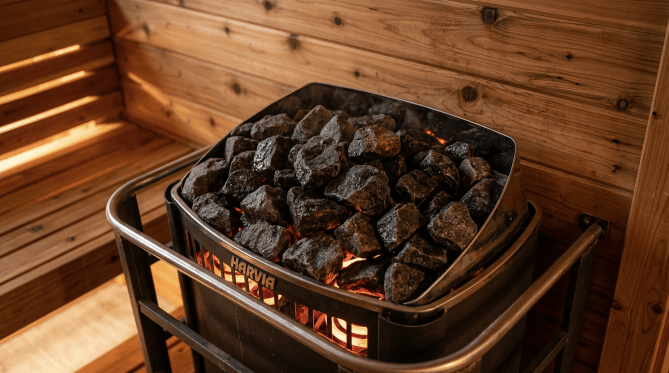
Dense volcanic stones sold specifically for sauna use, such as peridotite or olivine basalt, resist the thermal shock of water hitting a hot surface far better than generic landscaping or river rock, which can crack, shed grit, and eventually damage the heater element underneath. Stones are a small line item against the overall budget, usually well under the heater’s own cost, but a poor choice here shows up as reduced steam quality and more frequent replacement, so it is not the place to cut corners.
First Sessions: What to Expect as a Beginner
A new electric heater typically needs a short break-in period, running empty for the manufacturer’s specified time to burn off manufacturing residue before the first real session, along with basic ventilation to clear any smell. Water poured on the rocks in small, controlled amounts, rather than dumped all at once, produces löyly, the burst of steam that raises perceived heat without spiking the room’s actual air temperature. Most beginners start with shorter sessions, ten to fifteen minutes, and build up as they learn how their own body responds to sustained heat.
Ongoing Maintenance That Keeps a Budget Heater Running
Checking the stones every few months for cracking or grit buildup, vacuuming dust from the guard and element between sessions, and wiping down the interior wood keep a heater running well past its first few years. None of this requires special tools or an ongoing service contract, which is part of why a well-chosen electric heater remains one of the lower-maintenance parts of a home sauna once the install itself is done correctly.
Common Beginner Mistakes Worth Avoiding Early
Buying the heater before measuring the room is the single most frequent misstep, since a unit picked from a sale price rather than from actual cubic footage often turns out over or under sized once it is installed. A close second is skipping the electrician quote until after the heater arrives, which can leave a beginner with a heater sitting unused for weeks while a circuit gets scheduled. A third common mistake is loading the heater with whatever rocks were on hand rather than sauna-rated stone, which shows up months later as reduced steam quality and a guard full of grit that has to be cleaned out more often than it should.
See also: The Hidden Benefits of Massage Therapy during Business Trips
Budgeting the Full Project, Not Just the Heater
A beginner’s total spend usually breaks into three pieces: the heater and stones themselves, the electrical circuit if one is not already in place, and any room preparation such as a vapor barrier or interior wood finish if the sauna is going into an unfinished space. Treating the heater’s sticker price as the whole budget is a common source of surprise later, since the circuit and room work can add a meaningful amount depending on the space chosen. Getting a rough estimate for all three pieces before ordering the heater keeps the whole project closer to the original plan.
Frequently Asked Questions
What size sauna heater does a beginner need?
Use the rough rule of about 1 kW per 45 to 50 cubic feet of well-insulated room space as a starting point, then adjust upward for a glass door, poor insulation, or a ceiling taller than standard.
Should a first sauna heater be electric or wood-fired?
Electric is the more forgiving choice for a first setup since it only needs a properly sized circuit, while wood-fired heaters require a chimney, fuel storage, and usually a separate venting permit.
Can a beginner install a sauna heater without an electrician?
A small 120V heater can sometimes plug into an existing outlet, but any 240V heater needs a new dedicated circuit, which is electrical work most jurisdictions require a licensed electrician to pull a permit for.
How long should a beginner’s first sauna session last?
Most beginners start with ten to fifteen minutes and build up gradually as they learn how their body responds to sustained heat, rather than starting with a long session on day one.
What stones should a beginner buy for a new heater?
Dense volcanic stones made specifically for sauna use, like peridotite or olivine basalt, hold up far better against repeated heat and water contact than generic landscaping or river rock.
References
- Benefits and risks of sauna bathing, The American Journal of Medicine, 2001
- Effects of heat and cold on health, with special reference to Finnish sauna bathing, American Journal of Physiology, 2018
- Clinical Effects of Regular Dry Sauna Bathing: A Systematic Review, Evidence-Based Complementary and Alternative Medicine, 2018
By Derek Holloway